Retail Media vs Digital Signage

April 29, 2026

Made you look

Retail media vs digital signage explained — the key differences, when you need each, and how onQ Digital helps retailers convert a content display network into a revenue-generating platform.

Understanding the Difference

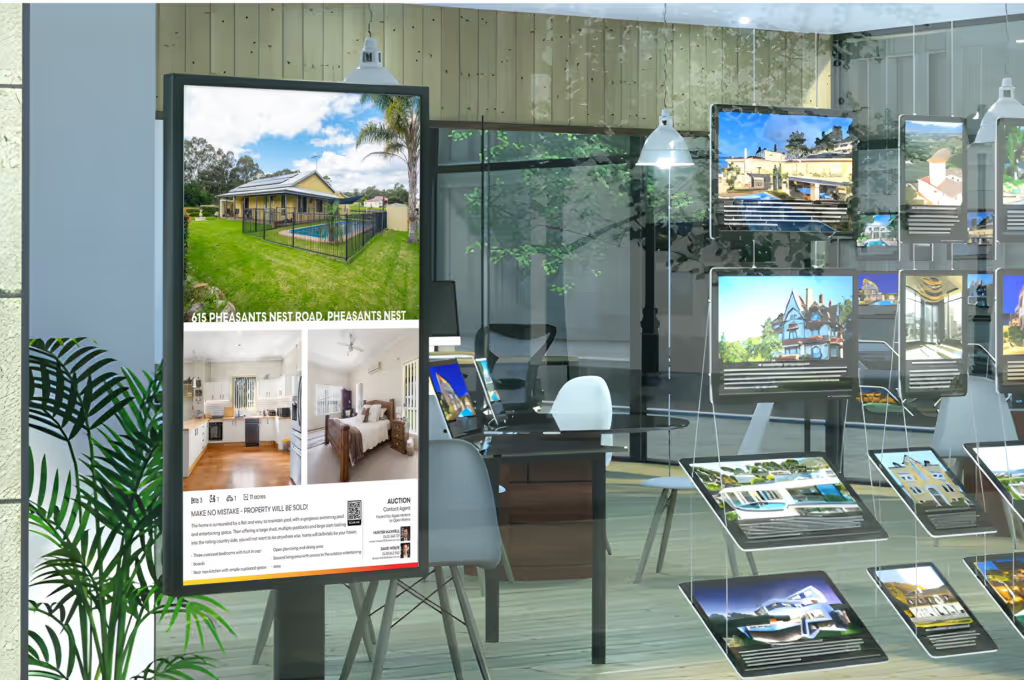
Retail media and digital signage are related but distinct concepts. Digital signage is the technology: the screens, media players, and CMS software used to display content in physical environments. Retail media is the commercial model: the infrastructure and processes that enable a retailer to sell advertising inventory on those screens to brand suppliers.

A digital signage network becomes a retail media network when it is connected to a commercial infrastructure that enables brands to buy advertising inventory. This requires additional technology (a programmatic SSP for connecting to DSPs), commercial infrastructure (advertiser onboarding, campaign management, and reporting), and audience measurement (verified impression data for advertiser accountability).

The Key Differences

DimensionDigital SignageRetail Media
Primary purposeContent display & communicationAdvertising revenue generation
Technology requiredScreens, media players, CMSAll of the above + SSP, DSP connectivity, audience measurement
Commercial modelCost centre (operational expense)Revenue centre (advertising income)
Key metricsUptime, content accuracy, device healthCPM, fill rate, revenue per screen, ROAS
StakeholdersIT, marketing, operationsMarketing, commercial, finance, brand suppliers

When Do You Need Retail Media vs Digital Signage?

You need digital signage when your primary objective is content display: communicating with customers, staff, or visitors via screens. You need retail media when your primary objective is revenue generation: monetising your audience and screen network through advertising.

Most retailers start with digital signage and evolve to retail media as their network matures and they identify the revenue opportunity. onQ Digital helps retailers make this transition, providing the technology and commercial infrastructure to convert a content display network into a revenue-generating retail media platform.

Retail Media

Retail Media vs Digital Signage

Retail media vs digital signage explained — the key differences, when you need each, and how onQ Digital helps retailers convert a content display network into a revenue-generating platform.

Understanding the Difference

Retail media and digital signage are related but distinct concepts. Digital signage is the technology: the screens, media players, and CMS software used to display content in physical environments. Retail media is the commercial model: the infrastructure and processes that enable a retailer to sell advertising inventory on those screens to brand suppliers.

A digital signage network becomes a retail media network when it is connected to a commercial infrastructure that enables brands to buy advertising inventory. This requires additional technology (a programmatic SSP for connecting to DSPs), commercial infrastructure (advertiser onboarding, campaign management, and reporting), and audience measurement (verified impression data for advertiser accountability).

The Key Differences

DimensionDigital SignageRetail Media
Primary purposeContent display & communicationAdvertising revenue generation
Technology requiredScreens, media players, CMSAll of the above + SSP, DSP connectivity, audience measurement
Commercial modelCost centre (operational expense)Revenue centre (advertising income)
Key metricsUptime, content accuracy, device healthCPM, fill rate, revenue per screen, ROAS
StakeholdersIT, marketing, operationsMarketing, commercial, finance, brand suppliers

When Do You Need Retail Media vs Digital Signage?

You need digital signage when your primary objective is content display: communicating with customers, staff, or visitors via screens. You need retail media when your primary objective is revenue generation: monetising your audience and screen network through advertising.

Most retailers start with digital signage and evolve to retail media as their network matures and they identify the revenue opportunity. onQ Digital helps retailers make this transition, providing the technology and commercial infrastructure to convert a content display network into a revenue-generating retail media platform.

Suggested FAQ's

Commonly asked Questions

What is the difference between retail media and digital signage?

Digital signage is the technology infrastructure — screens, CMS software, and media players — used to display content in physical environments. Retail media is the commercial layer built on top of that infrastructure, where venue operators sell advertising inventory on their screens to brands and suppliers. onQ's Retail Media OS combines both, transforming a standard screen network into a fully monetisable retail media business.

Can a digital signage network become a retail media network?

Yes. Any existing digital signage network can be evolved into a retail media network by adding the commercial and monetisation layer on top of the existing screen infrastructure. onQ Digital's Retail Media OS is specifically designed for this transition — the platform connects to existing screen hardware and CMS installations and adds programmatic SSP capability, advertiser campaign management, proof-of-play reporting, and audience analytics without requiring a full hardware replacement.

next steps

Ready to start a conversation?

Speak with our team about digital signage, CMS software, or retail media infrastructure. We’ll help you scope, design, and deploy the right solution.